
Kabaddi: From Mud to Mat, a Traditional Sport's Modern Journey
कबड्डी भारतीय उपमहाद्वीप का पारंपरिक खेल है जो अब मैट पर खेला जाता है। एक टीम में 7 खिलाड़ी होते हैं; रेड 30 सेकंड का होता है और रेडर को लगातार 'कबड्डी' बोलना होता है। अंक रेड में छूने, बोनस लाइन पार करने, टैकल और सुपर टैकल से मिलते हैं; ऑल-आउट पर 2 अंक और सभी खिलाड़ियों का पुनर्जीवन होता है। अंतरराष्ट्रीय कबड्डी महासंघ (IKF) 2004 में बना; भारत में AKFI घरेलू संचालन करता है। प्रो कबड्डी लीग 2014 में शुरू हुई। कबड्डी 1990 से एशियाई खेलों का हिस्सा है; भारत ऐतिहासिक रूप से प्रभावी रहा है, जबकि ईरान मुख्य प्रतिद्वंद्वी है और उसने 2018 जकार्ता एशियाई खेलों के पुरुष फाइनल में भारत को हराया था। कबड्डी अभी ओलंपिक खेलों का हिस्सा नहीं है।
Kabaddi is not a new sport. Played for centuries in the villages of the Indian subcontinent, it is today an organised, televised and internationally recognised discipline. Its greatest strength is its simplicity: no bat, no ball, no racquet. Two teams, one boundary line and one raider's breath. That simplicity has carried it from India, Iran, Bangladesh, Nepal and Sri Lanka to South Korea, Kenya and Chinese Taipei.
The transformation of the last decade is a textbook case of how a traditional sport modernises. Mud courts gave way to mats, local tournaments to franchise leagues, and instinct to video analysis. That shift made the sport professional, but it also took away some of its grassroots energy. Below, we look in sequence at the rules, the roles, the history, the league ecosystem and the international balance of power.
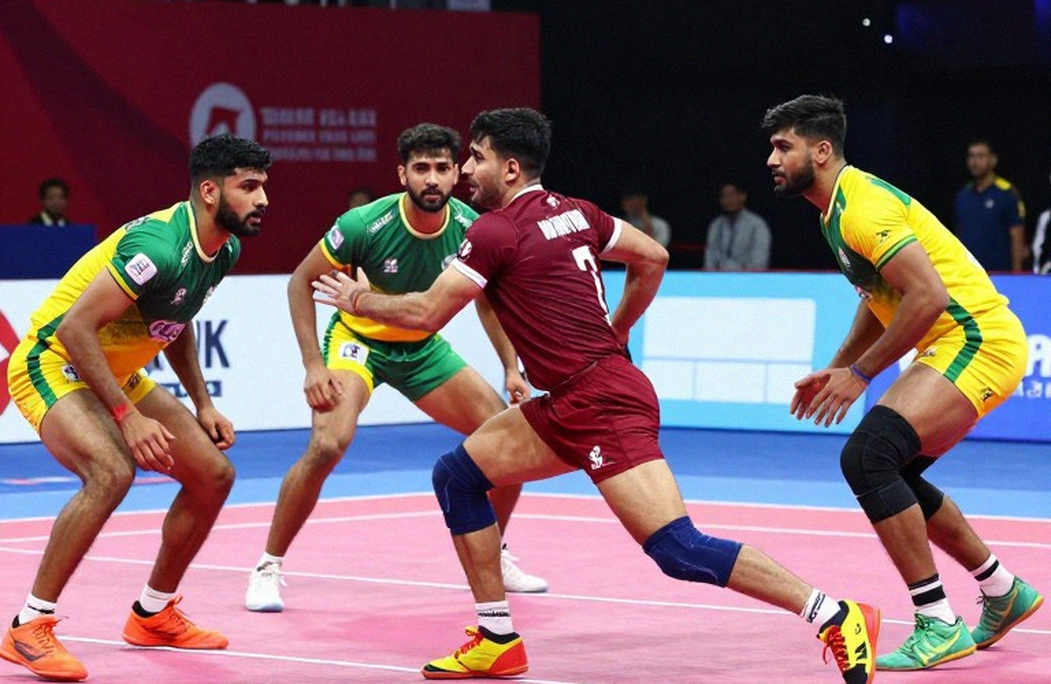
In standard kabaddi, seven players from each team are on the mat and five are in reserve. The men's mat measures 13 by 10 metres; the women's, 12 by 8. The baulk line runs across the middle and a raider must cross it. Beyond it lies the bonus line, and on both flanks the lobby. The lobby may be used only during a raid; entering it in defence is prohibited. That small technical detail is what the entire strategic edifice is built on.
A raid lasts 30 seconds. The raider must enter the opponents' half while continuously chanting 'kabaddi-kabaddi'. If he touches even one defender and returns to his own half, he earns a point and the touched player is out. If the defenders pin him down, the point goes to them and the raider is out. Crossing the bonus line earns an extra point, provided six or more opposing players are on the mat. This bonus rule is what generates the constant arithmetic debate between raider and defence.
Defence rests on two core skills: the catch and the tackle. In a catch, defenders grip the raider's waist or leg to stop him; in a tackle, they attack his legs and bring him down inside the boundary. When three or more defenders combine for a catch it is called a 'super tackle', worth two points. When every player on the opposing side is out, an 'all-out' is declared: two points and the revival of all players. That revival rule keeps the contest alive until the final breath and makes kabaddi one of the few sports where the game can turn in the last minute.
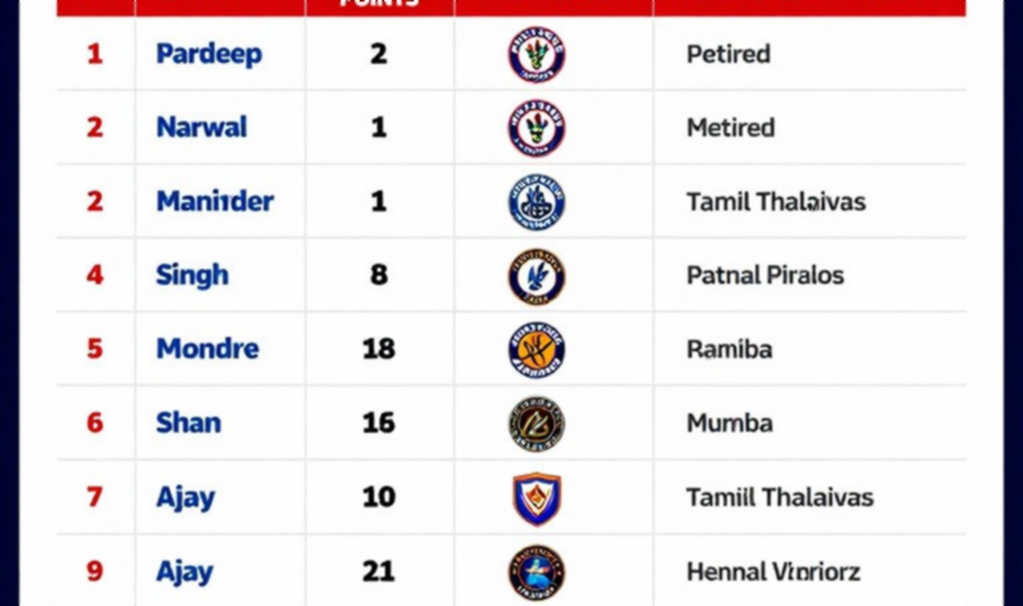
Modern kabaddi has split into three roles: raider, defender and all-rounder. In raiding one sees the speed and direct penetration of a Pawan Sehrawat, or the specialised 'dubki' of a Pardeep Narwal. In defence, Iranian players such as Fazel Atrachali are known for catch technique and for absorbing mental pressure. An all-rounder is one who can do both, and becomes the pivot of a team's balance strategy. In modern coaching, selection is no longer decided by form alone but by match situation and the opponent's weakness.
Kabaddi has carried many traditional names: 'hu-tu-tu', 'sanchi', 'amar', 'kaun bada'. It is often compared to the chakravyuh of the Mahabharata, though that claim is mythological and historical evidence is limited. References appear in Buddhist texts. The standardisation of modern rules came in the twentieth century, when national-level competitions began in India and a uniform rulebook became necessary.
The International Kabaddi Federation (IKF) was founded in 2026 and sought to harmonise the rules of international competition. In India, the Amateur Kabaddi Federation of India (AKFI) runs the domestic structure. The hardest task for these bodies is international coordination, particularly on the bonus line, the do-or-die raid and mat dimensions, which leagues and international formats apply differently. Two rule-versions of one sport create confusion for players and viewers alike over time.
The launch of the Pro Kabaddi League in 2026 changed the economics of the sport. Starting with eight teams, the league grew to twelve and gave players incomes that would have been unimaginable a decade earlier. Television broadcast, franchise auctions, foreign participation and professional coaching staff all arrived with the league. The biggest social effect was that the sport became a viable livelihood for players from rural backgrounds, rather than merely a route to a government job.
The league also made the sport data-driven. Raid success rate, tackle efficiency, error count, success ratio in do-or-die situations: such metrics are now part of selection and strategy. But there is another side: the calendar is packed and the injury burden on players has risen. Knee, ankle and shoulder injuries are common in kabaddi because the sport involves sudden stops, twists and falls. Sports medicine and recovery protocols remain uneven in this field.
Internationally, India has historically been the strongest side, but Iran has mounted a serious challenge to that dominance over the last two decades. Iran's strengths are defensive discipline, physical conditioning and technical precision in the catch. Countries such as Bangladesh, South Korea, Kenya, Chinese Taipei and Poland also take part in international competition, though the contest at the top is still narrow. India won the 2026 Kabaddi World Cup, and its opponent in that final was Iran, which reflects the current balance of power more clearly than any ranking.
Kabaddi has been part of the Asian Games since 2026 in Beijing, and India won the men's gold repeatedly for a long stretch. That run ended at the 2026 Jakarta edition, when Iran beat India in the final. The result was not sudden: Iran had been pushing close contests for years and had invested in long training camps. Afterwards, debate arose in the Indian set-up over preparation methods and changes were made to reclaim the top spot. The episode illustrates how quickly a monopoly can break in any sport.
Women's kabaddi started more slowly than the men's game but has accelerated in recent years. The women's category is part of the Asian Games and the Indian women's team has been among the top contenders. Domestically, women's leagues and state-level competitions have expanded, though prize money, broadcast and media coverage remain unequal compared with the men's game. This inequality is not specific to kabaddi; it is a broader problem in Indian sport.
Kabaddi's real strength lies in its grassroots base. Talent playing in the villages of Haryana, Uttar Pradesh, Maharashtra, Tamil Nadu and Karnataka is now reaching scouting networks, academies and trial-based selection systems. Many league players choose the sport to improve their family's financial situation, which is both their motivation and their pressure. When one sport is the only route to a livelihood, an injury or a bad season can change an entire household's circumstances.
The challenges are many. At the grassroots there is a shortage of good mats, trained coaches and medical facilities. Several state associations have seen administrative disputes that affect the fairness of selection. Internationally, the sport is still not part of the Olympic programme, which is kabaddi's biggest long-term ambition, and achieving it will require competitive participation growing not just in India but across several continents.
The way forward rests on three things: durable harmonisation of international rules, better medical care and career security for players, and the expansion of competition beyond India. If all three are achieved, kabaddi has an opportunity that very few sports get: to become a global game while keeping its cultural roots intact.
संबंधित खिलाड़ी
अनुशंसित
The Captain Is Named, the Blueprint Is Not: Surjeet-Naveen and the Empty Page Beneath India's Commonwealth Kabaddi Championship 2026 Squad2026-10-24
Commonwealth Kabaddi Championship 2026, Day 1: Bangladesh Sits Third Without Raiding Once — The Real Arithmetic of the Points Table2026-10-24
Commonwealth Kabaddi Championship: India's Margin Over England Will Not Measure India's Strength2026-10-30
Price Is Settled at the Auction, Value in the Column: Kabaddi's Market Ledger2026-10-24
Fourteen to Thirteen: Pakistan's Withdrawal Exists in No File2026-10-23
Commonwealth Kabaddi Championship: India's Third Straight Win, but the Real Test Awaits2026-10-26